Farasan Islands: Saudi Arabia's Hidden Gem in the Red Sea
Farasan Islands: Saudi Arabia's Hidden Gem in the Red Sea
In the far southwest of Saudi Arabia, roughly 40 kilometres off the coast of Jazan, lies an archipelago that defies every expectation. No desert. No dunes. Instead: turquoise water lapping at white coral beaches, dense mangrove forests rising from shallow bays, and coral reefs so alive with color and species that divers have compared them to the great systems of Southeast Asia.
Welcome to the Farasan Islands, Saudi Arabia's best-kept secret, and one of the most extraordinary natural and historical destinations in the entire Middle East.
The Farasan Islands consist of nearly 84 coral islands and islets spread across 1,050 square kilometres of the southeastern Red Sea. They are a UNESCO Biosphere Reserve, a protected wildlife sanctuary, an active archaeological site with layers of history stretching from the Bronze Age to the Ottoman era, and, for the growing number of international travelers discovering them, an experience unlike anything else the Kingdom has to offer.
This is your complete guide to the Farasan Islands: everything you need to know to plan an unforgettable visit to Saudi Arabia's hidden gem in the Red Sea.
A History Written in Three Languages: The Farasan Islands Through Time
Few places in Saudi Arabia carry the weight of history that the Farasan Islands do, and few places carry it so quietly. The archipelago has been a strategic maritime prize for virtually every major civilization that has approached the Red Sea, and the evidence is written into the islands' stone, soil, and architecture across more than two thousand years.
The most extraordinary historical revelation came in 2003, when two tourists discovered a Latin military inscription on Farasan Al-Kabir, the archipelago's main island. Examined by archaeologists in 2004, the inscription dates to 144 CE and records the construction of a Roman garrison by a detachment of Legio II Traiana Fortis, stationed in Egypt under Emperor Antoninus Pius.
Known in Roman records as Portus Ferresanus, the Farasan Islands constituted the farthest Roman military outpost in the known world, nearly 4,000 kilometres from Rome itself. A subsequent joint Saudi-French archaeological excavation uncovered Roman armor, copper ingots, a garnet inscription, and the head of a small stone statue, confirming a sustained Roman presence on the islands between the 1st and 3rd centuries CE.
The Romans were not alone. Al-Qassar Heritage Village, the oldest settlement on the islands, dating to Roman times, consists of some 400 traditional stone and coral houses arranged along five narrow lanes, many still standing.
By the early 20th century, the islands had come under Ottoman administration, and the whitewashed Ottoman Fort on the main island's northwestern ridge remains one of the archipelago's most distinctive landmarks today.
The jewel of this Ottoman-era heritage is Beit Al-Rifai: a grand residence built in 1922 for pearl merchant Ahmed Munawar Al-Rifai, decorated with intricate gypsum carvings and colored glass windows known as Kamaryat, its wooden ceilings painted in vivid natural blue, a masterpiece of Farasani architecture that reflects the islands' historic position at the center of Indian Ocean trade.
The nearby Al-Najdi Mosque, built in 1928 and named after pearl trader Ibrahim Al-Najdi, completes a heritage quarter that has no equal in the southern Red Sea.
Wildlife and Marine Life: A UNESCO Biosphere of Extraordinary Richness
Designated a UNESCO Biosphere Reserve in 2021 and protected by the Saudi Wildlife Authority since 1996, the Farasan Islands support one of the most biodiverse ecosystems in the Arabian Peninsula, both above and below the waterline.
Marine Life
The waters surrounding the Farasan Islands are home to approximately 230 species of fish, 50 types of coral, seaweed and algae, and a remarkable roster of large marine species. Manta rays, whale sharks, and multiple species of dolphin and whale inhabit the surrounding waters, with occasional visits by orcas.
Three species of sea turtle are resident, including the endangered green turtle and the critically endangered hawksbill turtle. Dugongs have also been recorded in the shallow seagrass beds surrounding several of the uninhabited outer islands.
For divers and snorkelers, the density and variety of coral formations here rivals celebrated reef systems elsewhere in the world, and the clarity of the water means visibility is exceptional year-round.
Bird Life
The uninhabited outer islands serve as critical breeding grounds for seabird populations of regional importance. Over 200 species of birds have been recorded across the archipelago, including osprey, sooty falcon, pink-backed pelican, red-billed tropicbird, white-eyed gull, Saunders's little tern, crab plover, and flamingo.
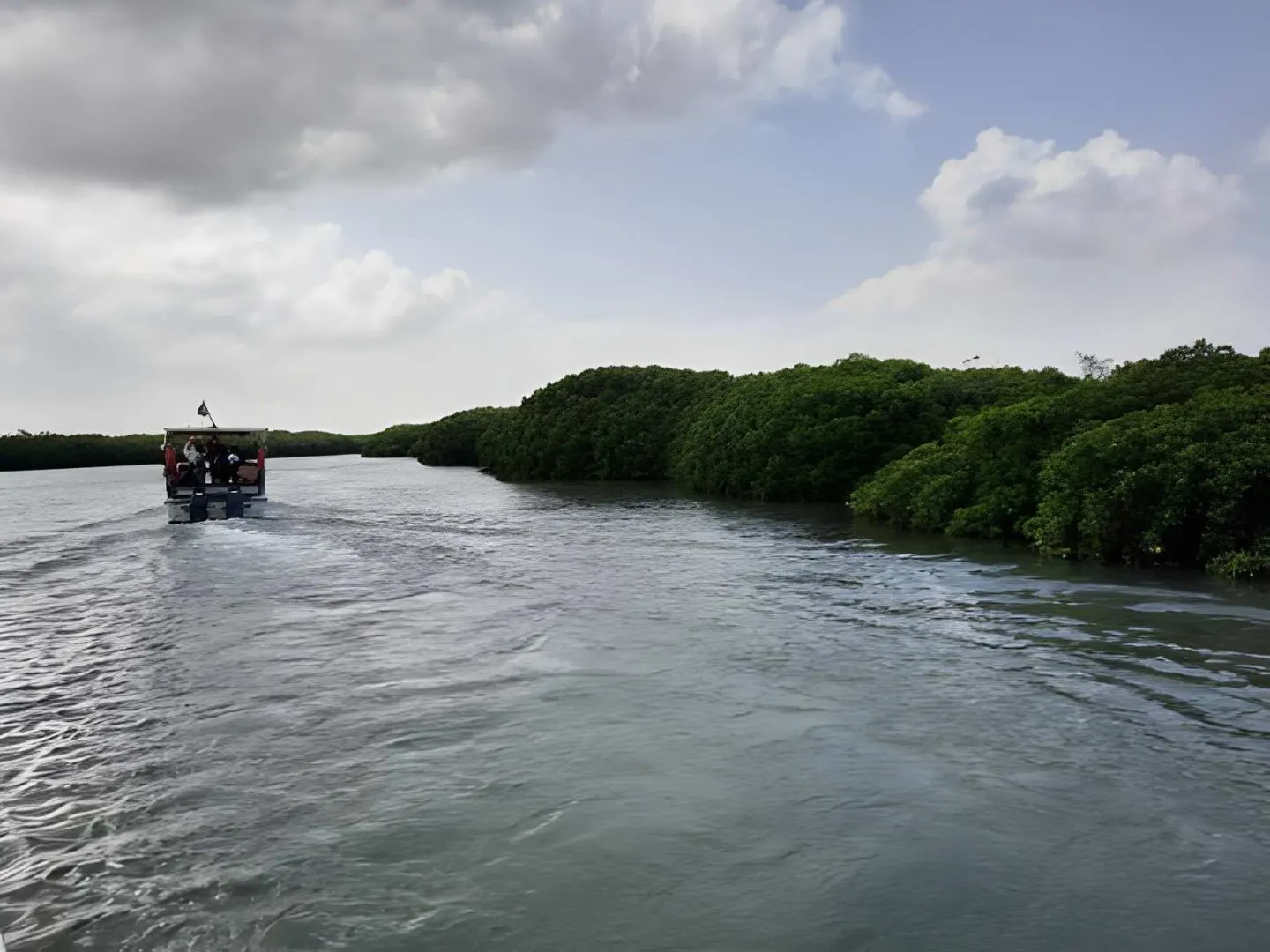
The Al-Qandal Forest, one of the most extensive mangrove forests in Saudi Arabia, covering a significant portion of the main island, provides vital nesting and feeding habitat for both resident and migratory species. For birdwatchers, the Farasan Islands represent one of the finest ornithological destinations in the entire Middle East.
The Farasan Gazelle
Perhaps the most emblematic creature of the islands is the Farasan gazelle, a subspecies of the Arabian gazelle found nowhere else on earth. The Saudi Wildlife Authority estimates that the Farasan Islands may be home to the largest remaining population of Arabian gazelles in the Kingdom.
Their elegant, fleet-footed silhouettes are a common sight moving through the shrubland of Farasan Al-Kabir, and encountering them in the wild on an island surrounded by turquoise Red Sea water is one of those genuinely improbable travel experiences that defines the Farasan Islands' appeal.
Top Attractions and Experiences on the Farasan Islands
1. Scuba Diving and Snorkeling
The Farasan Islands are, above all else, a diver's destination. The coral reefs surrounding the archipelago are among the healthiest and most biodiverse in the Red Sea, with wall dives, shallow reef gardens, and open-water encounters with large pelagic species all available within a short boat ride from the main island.
Snorkeling is equally rewarding, with accessible reef systems directly reachable from the shore at Ghadeer Bay, where calm, crystalline water reveals an underwater world of extraordinary richness. Dive operators based in Jazan city run guided day trips and multi-day liveaboard experiences throughout the year.
2. Beit Al-Rifai and the Heritage Quarter
No visit to the Farasan Islands is complete without exploring the heritage quarter of Farasan Al-Kabir. Beit Al-Rifai, the 1922 coral-stone merchant's house with its Kamaryat glass windows and painted ceilings, is the islands' most architecturally significant building and a window into the prosperous pearl-trading era that shaped Farasani society.
The nearby Ottoman Fort, Al-Najdi Mosque, and the restored Al-Qassar Heritage Village complete a compact but profoundly rich heritage circuit that can be explored on foot in a single morning.
3. Al-Qandal Mangrove Forest
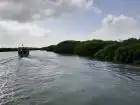
Saudi Arabia is not a country typically associated with mangroves, which makes Al-Qandal Forest on Farasan Al-Kabir all the more extraordinary. This dense, ancient mangrove system provides critical habitat for the islands' bird populations and serves as a nursery for the marine species that populate the surrounding reefs.
Walking trails wind through the forest, and guided kayak and boat tours allow visitors to explore the deeper channels between the mangrove roots, where herons stand motionless in the shallows and kingfishers dart between the branches above.
4. Beaches and Island Exploration
The Farasan Islands have some of the most beautiful beaches in Saudi Arabia, wide, white, uncrowded, and lapped by water of a turquoise intensity that seems almost unreal. Shati Al-Balaji and Shati Al-Jandal on the main island are the most accessible; the outer islands, reachable by boat, offer genuinely private beach experiences with no other visitors in sight. Boat tours around the archipelago reveal hidden coves, secluded bays, and isolated islets where the only inhabitants are nesting seabirds.
5. Fishing and the Local Fish Market
Fishing has been at the heart of Farasani culture for centuries, and the daily fish market on the main island remains one of the most authentic and atmospheric experiences available to visitors.
The catch arrives fresh each morning, hammour, kingfish, tuna, shrimp, and local shops will cook your selection on the spot in traditional Jazani spice blends. Guided fishing excursions with local fishermen can also be arranged, offering both a superb activity and a genuine window into island life.
How to Get to the Farasan Islands and Practical Travel Tips
Getting There
The departure point for all visits to the Farasan Islands is Jazan city, reached via King Abdullah bin Abdulaziz Airport (GIZ) with direct domestic flights from Riyadh (approximately 2 hours), Jeddah (approximately 1 hour), and Dammam.
From Jazan port, free government ferries operate regular services to Farasan Al-Kabir, with the crossing taking approximately two hours each way. Private speedboat transfers are also available through licensed tour operators and reduce the crossing time significantly.
Best Time to Visit
The Farasan Islands can be visited year-round, but the optimal window for most travelers is November through March, when temperatures are at their most comfortable (25–32°C), the sea is calm, and birdwatching is at its peak as migratory species arrive from Europe.
Diving visibility is exceptional throughout the year. Summer visits are possible and offer the advantage of fewer visitors and calmer early mornings, but the coastal heat requires careful planning of activities around the cooler parts of the day.
Where to Stay
Accommodation options on the main island include simple guesthouses and family-run rest houses. Most visitors choose to stay in Jazan city, which offers a wider range of hotels including international brands, and make day trips or overnight excursions to the islands.
A minimum stay of two full days on the islands is recommended to do justice to both the heritage sites and the marine experiences. Exploring Saudi can arrange complete Farasan Islands itineraries including transfers, accommodation, guided tours, and diving excursions.
Tailor Your Adventure With Our Packages Today!
Visitor Tips
- Carry cash: ATM and card payment infrastructure on the islands is limited. Bring sufficient riyals for meals, local tours, and market purchases.
- Respect the protected area: The Farasan Islands are a UNESCO Biosphere Reserve. No coral, shells, sand, or wildlife may be removed. Snorkelers and divers must not touch or stand on coral formations.
- Book a guide: Many of the most rewarding experiences, the outer island beaches, the mangrove kayaking, the heritage quarter, are best navigated with a knowledgeable local guide who can unlock access and context that independent travelers miss.
- Photography: The islands offer extraordinary photography opportunities, particularly the mangrove forest at sunrise, the heritage quarter's architectural detail, and the underwater reef. Bring a waterproof camera or housing.
Plan Your Farasan Islands Visit with Exploring Saudi
The Farasan Islands represent Saudi Arabia at its most quietly extraordinary. There are no big-city attractions here, no theme parks, no branded entertainment districts.
What there is, in breathtaking, unhurried abundance, is one of the world's finest coral reef systems, a protected wildlife sanctuary where endangered species roam freely, 2,000 years of layered civilizational history written into coral stone and Latin inscription, and beaches of a beauty that most international travelers have never imagined existed in Saudi Arabia.
Fewer than 150,000 visitors discover the Farasan Islands each year. Those who do return changed, not by spectacle, but by the rare experience of encountering a place that is genuinely, completely itself.
Ready to discover the Farasan Islands? Exploring Saudi designs private, fully guided itineraries across Saudi Arabia for international travelers. Visit exploringsaudi.com to plan your Farasan Islands experience, and let our team take care of every detail.
Frequently Asked Questions About the Farasan Islands
Where are the Farasan Islands?
The Farasan Islands are an archipelago of nearly 84 coral islands located in the Red Sea, approximately 40 kilometres off the coast of Jazan in southwestern Saudi Arabia. The islands cover a total sea area of 1,050 square kilometres and are administratively part of Jazan Province. The main island, Farasan Al-Kabir, is the most accessible and developed for tourism.
Are the Farasan Islands a UNESCO site?
Yes. The Farasan Islands Protected Area was designated a UNESCO Biosphere Reserve in 2021, recognizing the extraordinary biodiversity of the archipelago's marine and terrestrial ecosystems. The islands are also included on Saudi Arabia's tentative list for full UNESCO World Heritage Site status. The islands have been protected by the Saudi Wildlife Authority since 1996.
What marine life can I see at the Farasan Islands?
The waters surrounding the Farasan Islands support approximately 230 species of fish and 50 types of coral, along with manta rays, whale sharks, multiple species of dolphins and whales, dugongs, green turtles, hawksbill turtles, and occasional orca sightings. On land, the Farasan gazelle, found nowhere else on earth, roams the main island, and over 200 bird species have been recorded across the archipelago.
Is it true the Romans were on the Farasan Islands?
Yes, and it is one of the most remarkable historical facts about Saudi Arabia. In 2003, two Latin inscriptions were discovered on Farasan Al-Kabir, dated to 144 CE and 139 CE respectively. They record the presence of Roman military garrisons from Legio II Traiana Fortis and Legio VI Ferrata, making the Farasan Islands the most remote Roman military outpost ever discovered, nearly 4,000 kilometres from Rome. Subsequent joint Saudi-French archaeological excavations have uncovered Roman armor, statuary, and artifacts dating to the 1st–3rd centuries CE.
What is the best time of year to visit the Farasan Islands?
The best time to visit the Farasan Islands is between November and March, when temperatures are most comfortable (25–32°C), the sea is calm, and migratory birdwatching is at its peak. Diving visibility is excellent year-round. Summer visits are possible and offer a quieter, more private experience, but require activity planning around the cooler morning and evening hours.
How do I get to the Farasan Islands from Jazan?
Free government ferries run regularly from Jazan port to Farasan Al-Kabir, with the crossing taking approximately two hours. Private speedboat transfers are available through licensed tour operators for a faster crossing. Jazan is reached via King Abdullah bin Abdulaziz Airport (GIZ), with direct domestic flights from Riyadh, Jeddah, and Dammam.
Can I visit the Farasan Islands as an international tourist?
Yes. International tourists can visit the Farasan Islands on a Saudi tourist e-visa, available to citizens of over 60 countries. The e-visa can be obtained online in minutes via the official Saudi visa platform. Most attractions, heritage sites, beaches, and dive operators on the islands are open to all visitors. English is understood by most tourist-facing businesses in Jazan and on the main island.