
Elephant Rock
Elephant Rock in AlUla: Saudi Arabia’s Timeless Natural Wonder
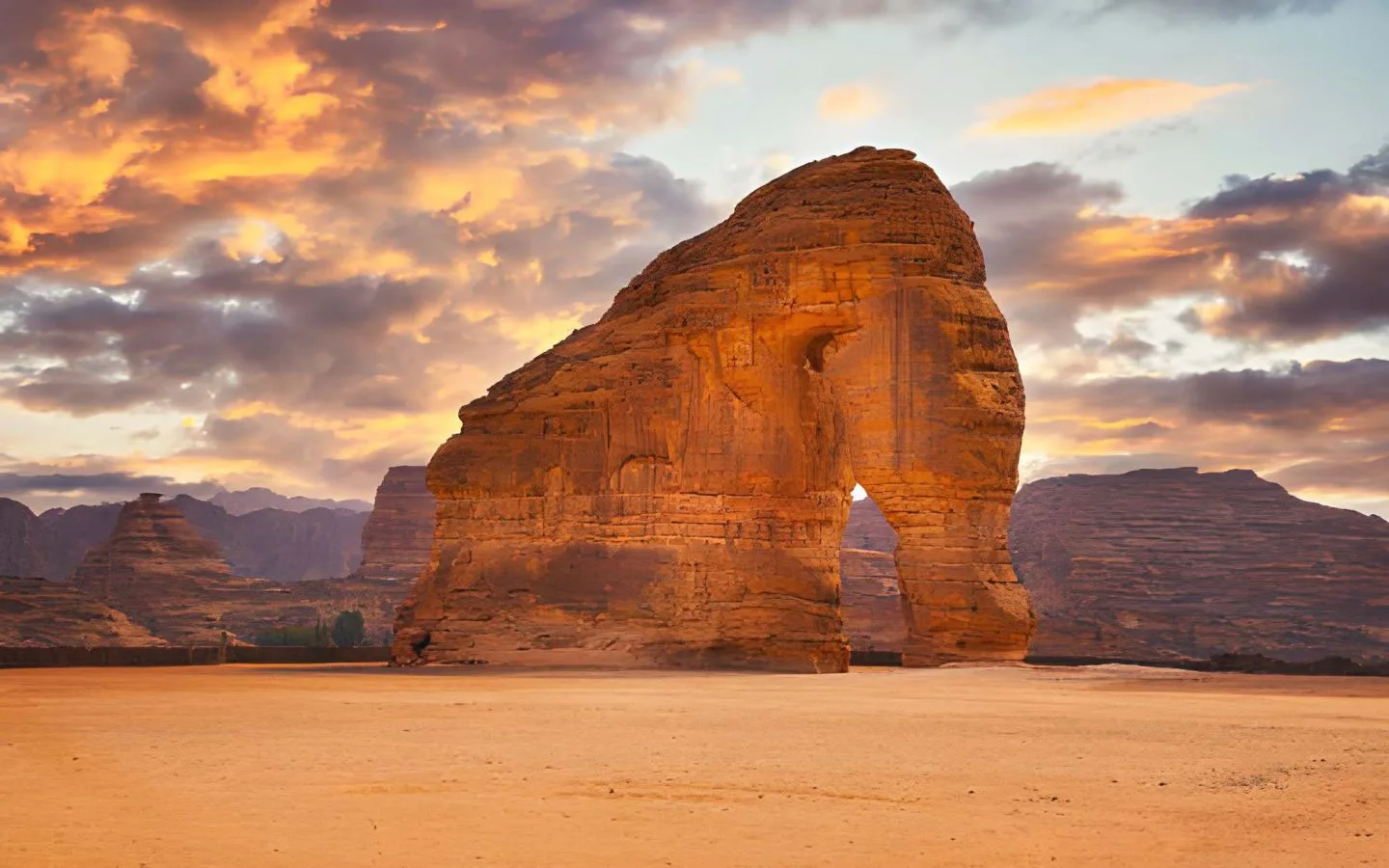
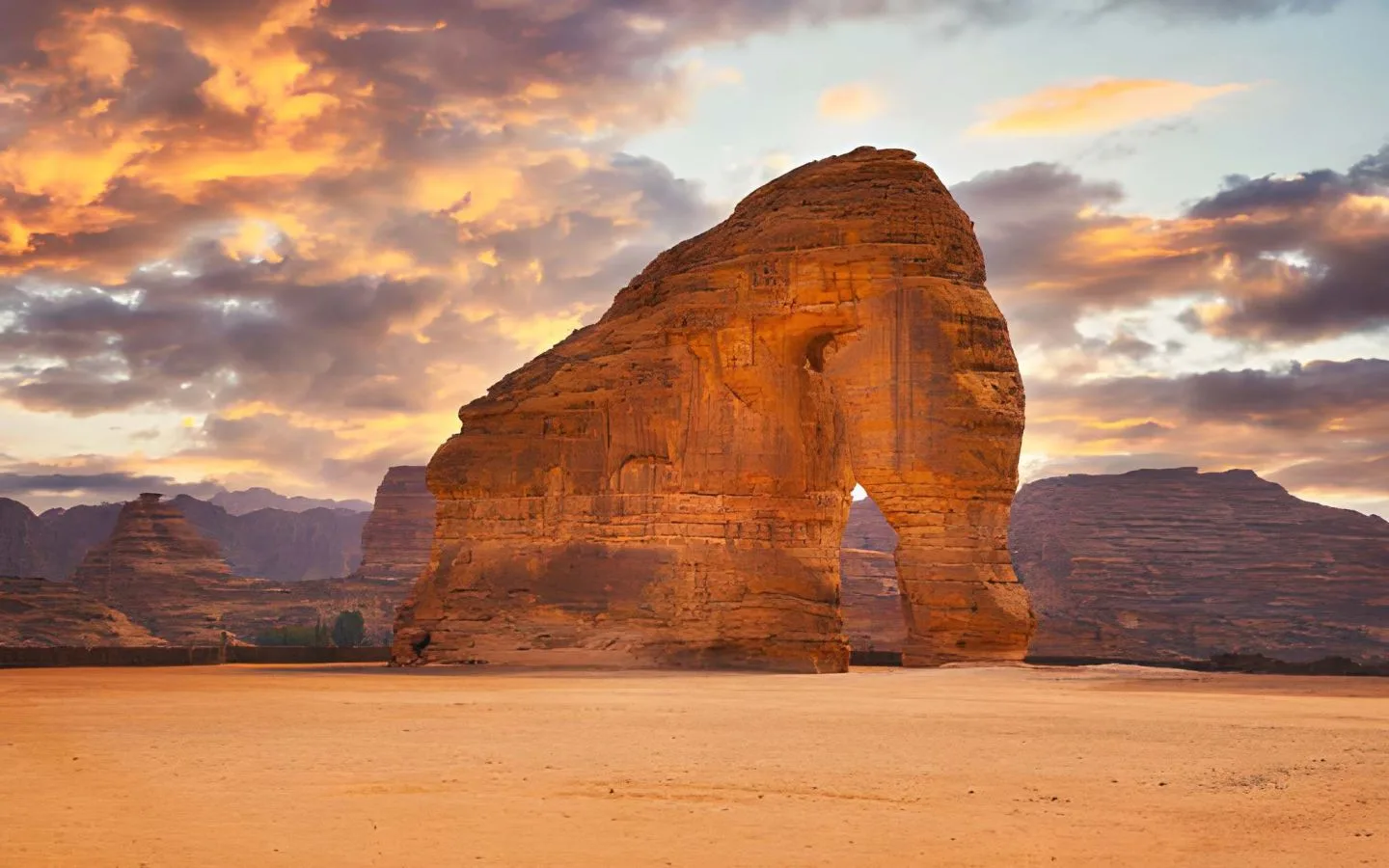
Elephant Rock, also known as Jabal AlFil, is one of Saudi Arabia’s most awe-inspiring natural landmarks, rising dramatically from the golden sands of AlUla in the northwest region of the Kingdom.
This monumental rock formation, shaped remarkably like an elephant with its trunk touching the ground, has become an emblem of Saudi Arabia’s growing tourism industry. Set against the backdrop of AlUla’s sandstone cliffs and illuminated at sunset in fiery shades of red and gold, Elephant Rock captivates visitors with its surreal beauty and geological grandeur.
As Saudi Arabia opens its doors to global travelers, Elephant Rock stands as a symbol of natural artistry, history, and transformation.
Attracting adventurers, photographers, and cultural enthusiasts alike, Elephant Rock offers an unmatched visual experience that encapsulates the spirit of AlUla — a place where ancient civilizations, desert landscapes, and striking rock formations coexist in perfect harmony.
The formation, sculpted by millions of years of wind and water erosion, reveals the timelessness of nature’s craftsmanship. Visitors are drawn not only to its iconic silhouette but also to the serenity of its surrounding environment, which creates a meditative escape from the bustle of modern life.
For those planning Saudi Arabia Travel Packages, a stop at Elephant Rock is more than a must — it’s a journey into the heart of the Arabian desert’s soul.
Beyond its aesthetic magnetism, Elephant Rock symbolizes Saudi Arabia’s revival as a global destination for natural, historical, and cultural tourism. The AlUla region, home to UNESCO World Heritage sites like Madain Saleh (Hegra) and ancient kingdoms such as the Lihyanites and Dadanites, provides a living museum of heritage.
Elephant Rock, as part of this majestic region, draws travelers seeking authentic experiences that connect them to both the earth’s natural history and the stories etched into its stones.
The Geological Marvel of Elephant Rock
Elephant Rock’s geology is a masterpiece shaped by nature over millions of years. Standing approximately 52 meters tall, this sandstone giant showcases the raw power of erosion and the delicate artistry of time.
The rock’s distinctive elephant-like form — complete with a “trunk” and “body” — results from wind-driven sand abrasion that gradually carved out its recognizable contours. This process, which continues to this day, speaks of the region’s ever-evolving desert landscape.
The rock’s surface reveals intricate layers of sediment that date back to prehistoric ages, making it a fascinating site for geologists and travelers interested in Earth’s natural history.
The area surrounding Elephant Rock is dotted with similar but less pronounced formations, highlighting the forces of wind and weather that have sculpted AlUla’s terrain into a wonderland of shapes, arches, and pillars. The nearby volcanic plateaus of Harrat Uwayrid add contrast to the landscape, creating a geological playground worth exploring.
Elephant Rock’s Cultural and Historical Context
The cultural significance of Elephant Rock extends far beyond its physical beauty. For centuries, AlUla has served as a crossroads for trade, culture, and civilization. The area once formed part of the ancient incense route, connecting the Arabian Peninsula to Egypt and the Mediterranean.
Travelers and caravans would pass through AlUla’s valleys, leaving behind traces of their presence through inscriptions, tombs, and artifacts. Elephant Rock, standing sentinel at the edge of the desert, likely served as a natural landmark guiding merchants and nomads across the sands.
Today, Elephant Rock continues to embody AlUla’s spirit of connection — between past and present, nature and humanity. Visitors often pair their visit to this natural wonder with explorations of nearby archaeological treasures like Dadan, Jabal Ikmah, and the artistic marvel of the Maraya Theatre. Together, they weave an unforgettable narrative of heritage and wonder.
Modern Tourism and Elephant Rock’s Transformation
In recent years, Elephant Rock has undergone a thoughtful transformation from a natural landmark into a world-class tourist destination. With the Saudi Vision 2030 initiative promoting sustainable tourism, AlUla has become the centerpiece of the Kingdom’s cultural renaissance.
The introduction of eco-friendly lounges, walking trails, and stargazing platforms has elevated the Elephant Rock experience while preserving its pristine environment. Visitors can relax at outdoor cafés, sip traditional Arabic coffee, and watch the rock glow under the star-filled desert sky — an experience unlike any other.
Elephant Rock is now easily accessible via well-maintained roads from AlUla International Airport, making it a convenient stop for tourists exploring northwest Saudi Arabia. The nearby accommodations range from luxury desert resorts to boutique lodges, all designed to complement the region’s natural ambiance. The destination exemplifies how Saudi Arabia balances development with conservation, offering immersive experiences that respect its ecological and cultural integrity.
Photography and Golden Hour Magic at Elephant Rock
Photography enthusiasts find Elephant Rock irresistible, particularly during sunrise and sunset when the colors of the rock shift from deep amber to glowing crimson. The soft desert light accentuates the rock’s textures, while its massive shadow stretches across the sand in a poetic dance of light and form.
Professional and amateur photographers alike flock to capture this natural spectacle. The area is also one of Saudi Arabia’s top photography spots, often featured in travel magazines and documentaries for its surreal beauty.
Nighttime transforms Elephant Rock into a stargazer’s paradise. Far from urban light pollution, the desert sky reveals constellations in dazzling clarity. Many visitors stay late to enjoy starlit picnics or guided astronomy sessions — a nod to AlUla’s reputation as one of the most enchanting destinations for cosmic observation in the Middle East.
How to Visit Elephant Rock: Travel Tips and Best Time
Planning a visit to Elephant Rock requires some timing and preparation.
- The best time to visit AlUla is between October and March, when temperatures are cooler, and the desert atmosphere feels crisp and inviting.
- Early mornings and late afternoons offer the most comfortable conditions and the best lighting for photography.
- Travelers who join curated Saudi Arabia Tours often find Elephant Rock included in their itineraries, ensuring guided insights and seamless logistics.
- Pack light clothing suitable for desert climates, comfortable walking shoes, and sunscreen. Evenings can get chilly, so a light jacket is recommended.
- Many tour guides suggest combining the Elephant Rock experience with sunset viewing sessions and visits to nearby attractions like Old Town AlUla or Sharaan Nature Reserve for a well-rounded exploration of the region’s splendor.
Elephant Rock’s Role in Saudi Arabia’s Tourism Future
Elephant Rock perfectly encapsulates Saudi Arabia’s evolving identity as a destination of natural and cultural richness. It symbolizes both the timeless beauty of the Arabian desert and the Kingdom’s modern ambition to share its treasures with the world.
As sustainable infrastructure develops, Elephant Rock remains at the heart of AlUla’s narrative — a reminder that progress and preservation can indeed walk hand in hand.
For global travelers seeking authenticity, serenity, and breathtaking scenery, Elephant Rock stands as one of the most rewarding stops in the Kingdom. Its allure lies in its simplicity: a natural sculpture honed by wind and time, surrounded by an endless canvas of sand, stars, and silence. It’s not just a sight to see but a feeling to experience — a moment where nature’s quiet power speaks directly to the soul.
FAQs About Elephant Rock, AlUla
1. Where is Elephant Rock located?
Elephant Rock is located near the city of AlUla in northwestern Saudi Arabia, about 20 minutes from the main heritage sites of the region. It’s easily accessible by car and close to major landmarks like Madain Saleh and the AlUla Old Town.
2. What makes Elephant Rock unique?
Elephant Rock’s uniqueness lies in its natural formation, which resembles an elephant with a clearly defined trunk and body. Shaped by millions of years of wind erosion, it’s a geological wonder that combines art and nature in one extraordinary structure.
3. When is the best time to visit Elephant Rock?
The ideal time to visit Elephant Rock is from October through March when the weather in AlUla is cooler and more comfortable. Sunset hours are particularly popular for photography and relaxation due to the striking light conditions.
4. Are there facilities near Elephant Rock?
Yes, visitors can find well-developed facilities including cafés, comfortable seating areas, and viewing platforms. The site emphasizes sustainability and comfort, blending modern amenities with the untouched beauty of the desert.
5. Can Elephant Rock be visited at night?
Absolutely. Night visits are highly recommended as the area becomes a tranquil stargazing spot. The clear desert sky creates an unforgettable experience, ideal for those seeking peace, reflection, or cosmic photography.