Saudi Desserts You Must Try
Saudi Arabia’s culinary landscape is steeped in deep-rooted traditions, where every bite tells a story of hospitality, warmth, and heritage. Among its most enchanting treasures are Saudi desserts—sumptuous creations that delight both the eye and palate.
These sweets are more than just after-meal indulgences; they’re cultural symbols, crafted with love, often using time-honored recipes passed down through generations. Whether you’re wandering through the aromatic stalls of Dirah Souq in Riyadh or savoring a cup of Arabic coffee at a cozy family gathering, you’ll find desserts that perfectly embody the country’s hospitality.
From the silky smoothness of Muhallabia to the caramelized crunch of Kunafa, Saudi desserts boast rich textures, fragrant spices, and an irresistible sweetness. Many are made from natural ingredients like dates, saffron, cardamom, honey, and rosewater—each lending a distinctive note to the final dish.
During Ramadan, weddings, and festive celebrations, these confections become the centerpiece of Saudi tables, served with pride and shared generously. For travelers exploring the Kingdom on Saudi Arabia travel packages, tasting these desserts offers an authentic connection to the nation’s cultural soul.
This guide dives into Saudi Arabia’s most beloved desserts you must try, revealing what makes each one special, the stories behind their origins, and where you can experience them. Get ready to indulge your senses and discover the sweet side of Arabia like never before.
Balilah and Basbousa: Sweet Beginnings in Every Bite
Starting strong with Basbousa, a golden, syrup-soaked semolina cake, it’s one of the most adored desserts throughout the Middle East, but Saudi Arabia gives it its own flair. Infused with coconut, ghee, and occasionally rosewater, Basbousa melts in your mouth while delivering a nostalgic sweetness reminiscent of traditional Saudi homes.
It’s particularly popular during Ramadan and is often paired with a steaming cup of Saudi coffee or mint tea. Served warm, it’s the perfect comfort dessert after a hearty Arabic meal.
Balilah, while lighter, brings a delightful balance to the table. Though often considered a snack, this chickpea-based treat can be slightly sweetened, especially during festive gatherings. It’s a wonderful introduction to Saudi flavors—simple, wholesome, and satisfying. Travelers exploring Saudi Arabia tours often find locals offering Balilah during social events, symbolizing generosity and community spirit.
Ma’amoul: The Kingdom’s Iconic Date-Filled Delight
No exploration of Saudi desserts would be complete without mentioning Ma’amoul. These delicate shortbread cookies, filled with dates, pistachios, or walnuts, are miniature pieces of heaven. Their crumbly exterior contrasts beautifully with the sweet, rich interior.
In Saudi Arabia, Ma’amoul is traditionally prepared during Eid to mark joyous celebrations. The making of Ma’amoul often turns into a family affair—grandmothers, mothers, and daughters working together, chatting, laughing, and shaping intricate patterns with wooden molds.
Dates, often considered “the jewels of the desert,” take center stage in this dessert. For those curious about the variety of dates used, exploring the Saudi Dates Guide will enrich your understanding of this sacred fruit’s role in the Kingdom’s cuisine. Whether dusted with powdered sugar or enjoyed plain, Ma’amoul embodies the Saudi love for balance—sweet yet not cloying, rich yet refined.
Kunafa: The Royal Crunch of Sweet Indulgence
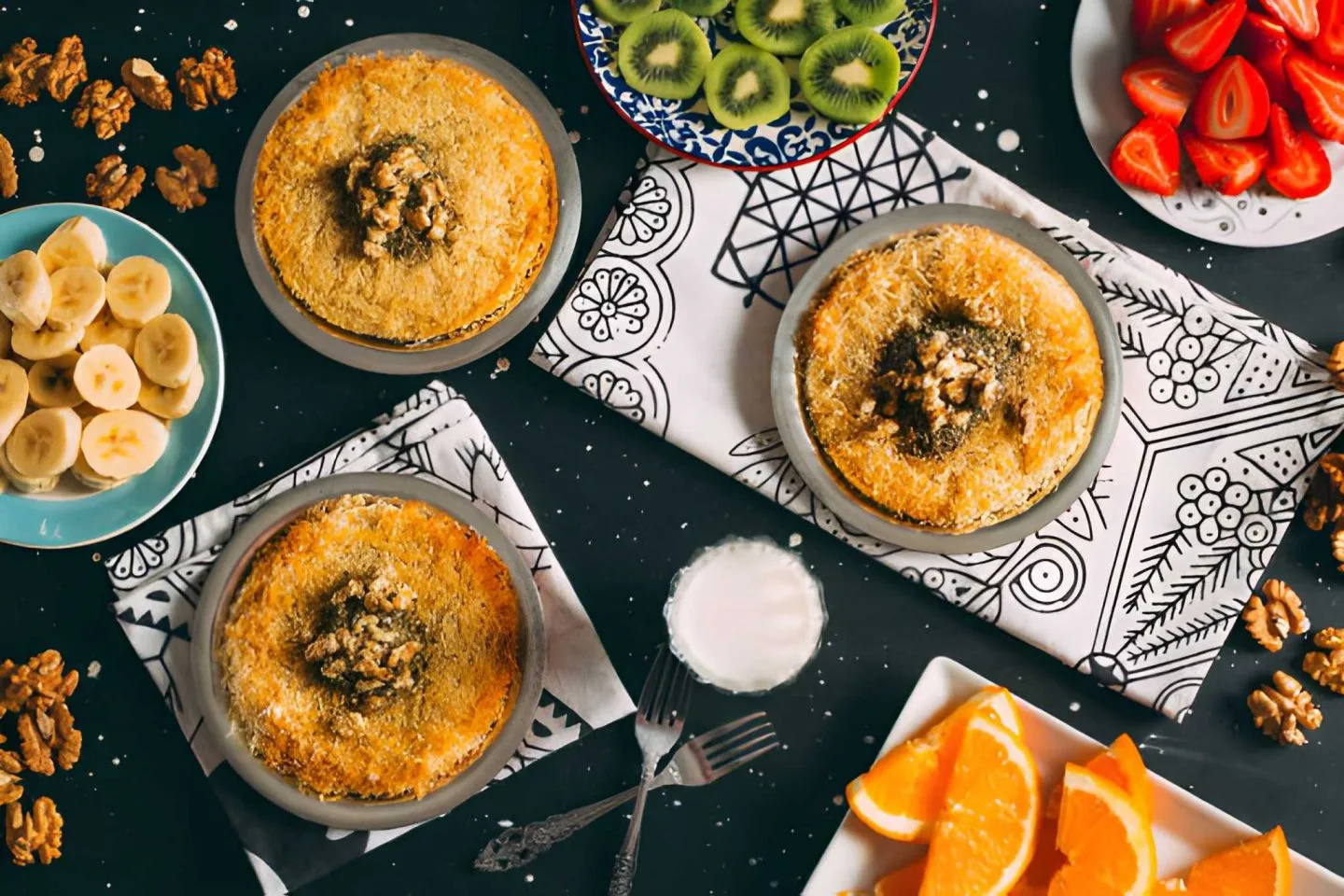
Ah, Kunafa—the dessert that wins hearts at first bite. It’s an irresistible blend of shredded phyllo dough or semolina pastry, layered with creamy cheese or rich cream, then drenched in fragrant orange blossom or rose syrup.
Crispy on the outside, gooey within, Kunafa offers a texture and taste that’s pure magic. In Saudi Arabia, Kunafa is a showstopper at weddings, special dinners, and even casual family gatherings. Its preparation often signals celebration, and its golden hue mirrors the country’s warm hospitality.
For visitors, the best Kunafa experiences are often found near heritage sites like Diriyah, where traditional cafes prepare it fresh. Each region has its twist—some add clotted cream, others prefer pistachio toppings. No matter the variation, Kunafa captures the essence of Saudi indulgence: generous, exquisite, and unforgettable.
Qatayef: The Ramadan Favorite That Steals the Show
If you ever find yourself in Saudi Arabia during Ramadan, you’ll encounter Qatayef everywhere—from bustling city bakeries to family Iftar tables. These folded pancakes, stuffed with nuts, sweet cheese, or cream, then fried or baked to perfection, are symbolic of togetherness. Drenched in syrup and sprinkled with crushed pistachios, Qatayef delivers a balance of crunch and creaminess that’s hard to resist.
Traditionally, families gather to prepare Qatayef as the sun sets, filling homes with the scent of sugar and spice. This dessert isn’t merely a treat; it’s a ritual—a shared moment of joy after a day of fasting. Qatayef perfectly represents Saudi Arabia’s knack for blending simplicity and opulence, offering a taste of history with every bite.
Asida: A Bedouin Legacy of Sweet Comfort
Asida, often described as the “desert pudding,” holds a special place in Saudi hearts. Made with flour, butter, and honey, it’s a soft, comforting dish served warm and eaten by hand. Historically, Bedouins prepared Asida during cold desert nights as a source of energy and warmth.
Today, it’s a cherished comfort food served during family gatherings, particularly in the central and southern regions of the Kingdom.
The beauty of Asida lies in its simplicity. Topped with honey or date syrup, it provides a naturally sweet flavor that pairs beautifully with Arabic coffee or tea. Travelers visiting traditional restaurants like Najd Village Restaurant in Riyadh can savor authentic Asida prepared using ancestral techniques. It’s a dish that connects the past with the present—a spoonful of Saudi heritage in every bite.
Masoub: The Banana-Bread Pudding of Saudi Arabia
Masoub is a hearty dessert that doubles as breakfast for many Saudis. Made from mashed ripe bananas, ground flatbread, cream, and honey, it’s a delightful fusion of texture and flavor. Originating in the southern regions, particularly in Najran and Asir, Masoub has gained nationwide popularity. Its richness makes it both nutritious and indulgent—a favorite among locals and visitors alike.
You’ll find Masoub served at cafes across Riyadh and Jeddah, often topped with dates, nuts, or a drizzle of ghee. The dish’s rustic charm captures the spirit of Saudi cuisine—humble ingredients transformed into something extraordinary. After exploring cultural landmarks like the National Museum of Saudi Arabia, indulging in Masoub offers a deeply satisfying culinary reward.
Jareesh Halwa: A Modern Twist on Ancient Grains
Jareesh Halwa is a modern reinvention of a timeless Saudi dish. Traditionally, Jareesh refers to crushed wheat cooked with spices and meat. The dessert version transforms it into a sweet, sticky halwa made with sugar, butter, and cardamom.
Its nutty undertones and chewy texture make it a favorite during Eid and weddings. The combination of wheat and sweetness gives it a wholesome profile, making it both nourishing and indulgent.
This dessert reflects how Saudi cuisine continues to evolve—respecting tradition while embracing creativity. Many upscale restaurants serving fine dining in Saudi Arabia have reimagined Jareesh Halwa with artistic flair, turning it into a dessert worthy of five-star menus.
Gursan and Hareesah: Traditional Textures That Tell Tales
Gursan and Hareesah blur the line between savory and sweet, offering a complex flavor balance that defines Saudi culinary heritage. Gursan, when prepared as a dessert, involves layers of thin bread drenched in syrup and butter, creating a rich, caramelized flavor. Hareesah, on the other hand, is a wheat-based sweet porridge infused with cardamom and cinnamon, often topped with nuts. It’s a dish that comforts the soul, much like rice pudding in other cultures.
Both desserts showcase the Saudi love for grains and spices, reflecting a cuisine born from desert ingenuity. They’re particularly popular in older markets near heritage attractions like Old Town AlUla, where locals preserve recipes that have stood the test of time.
Luqaimat: The Bite-Sized Sweet That Defines Saudi Hospitality
Perhaps the most iconic of all Saudi sweets, Luqaimat (or Luqmat al-Qadi) are golden dough balls fried until crisp and then drizzled with honey or date syrup. Light, airy, and addictive, these bite-sized delights are a staple during Ramadan and festive seasons. Their subtle saffron aroma and crunchy texture make them impossible to stop at just one.
In Saudi culture, offering Luqaimat is a gesture of welcome. Whether served at a street-side vendor or a luxury hotel, they bring smiles to every face. After watching the sunset from Sky Bridge at Kingdom Tower, there’s no better way to end the evening than with a plate of warm Luqaimat and a cup of saffron tea.
Where to Try Authentic Saudi Desserts
For those embarking on culinary adventures, the best way to experience Saudi desserts is by exploring local markets, traditional restaurants, and family-run bakeries. Riyadh’s Najd Village and Jeddah’s Al-Balad district are top spots to taste authentic sweets. In AlUla, cafes near Maraya Theatre often serve contemporary interpretations of traditional recipes, blending heritage with innovation.
FAQs About Saudi Desserts You Must Try
What are the most famous Saudi desserts?
The most famous Saudi desserts include Ma’amoul, Kunafa, Luqaimat, Basbousa, and Qatayef. Each has its distinctive flavor profile and cultural significance, making them must-try sweets for anyone visiting Saudi Arabia.
Where can I buy Saudi desserts in Riyadh?
In Riyadh, traditional desserts can be found at local bakeries, street vendors, and restaurants like Najd Village. Markets near Masmak Fort also offer authentic sweets prepared using ancestral techniques.
Are Saudi desserts very sweet?
While many Saudi desserts are sweet, they often achieve a natural balance using dates, honey, and nuts rather than processed sugars. Spices like cardamom and saffron add depth, creating rich yet balanced flavors.
Which Saudi dessert is best during Ramadan?
During Ramadan, Qatayef and Luqaimat steal the spotlight. These desserts are symbolic of the season and are enjoyed after Iftar for their comforting sweetness and festive appeal.
Can tourists easily find Saudi desserts?
Absolutely! Visitors can find Saudi desserts in hotels, cafes, and local markets across the Kingdom. Those on Saudi Arabia itineraries can easily include dessert tastings as part of their cultural experience.