What Are The Latest Archaeological Discoveries In Saudi?
Unveiling the Past: The Latest Archaeological Discoveries in Saudi Arabia
Saudi Arabia, a land historically shrouded in mystery and legend, is rapidly transforming into a global hub for archaeological exploration. Over the past few years, the Kingdom has launched ambitious excavation projects revealing astonishing insights into ancient civilizations that once thrived across the Arabian Peninsula. From pre-Islamic relics to monumental rock carvings, these groundbreaking discoveries are reshaping our understanding of human history and the Arabian world’s role in global heritage. Driven by the Vision 2030 initiative, Saudi Arabia’s archaeological research aims to preserve its cultural identity while promoting sustainable heritage tourism. As experts dig deeper into its sands, what they’re finding is nothing short of awe-inspiring—evidence of ancient trade networks, lost cities, and even monumental tombs rivaling global wonders.
For travelers eager to witness these marvels firsthand, the Kingdom offers exclusive Saudi Arabia Tours that combine adventure with cultural immersion. Sites like Madain Saleh (Hegra) and Dadan have become focal points for both international archaeologists and curious travelers, making Saudi Arabia one of the most exciting destinations for history enthusiasts today.
The Rediscovery of AlUla’s Ancient Kingdoms
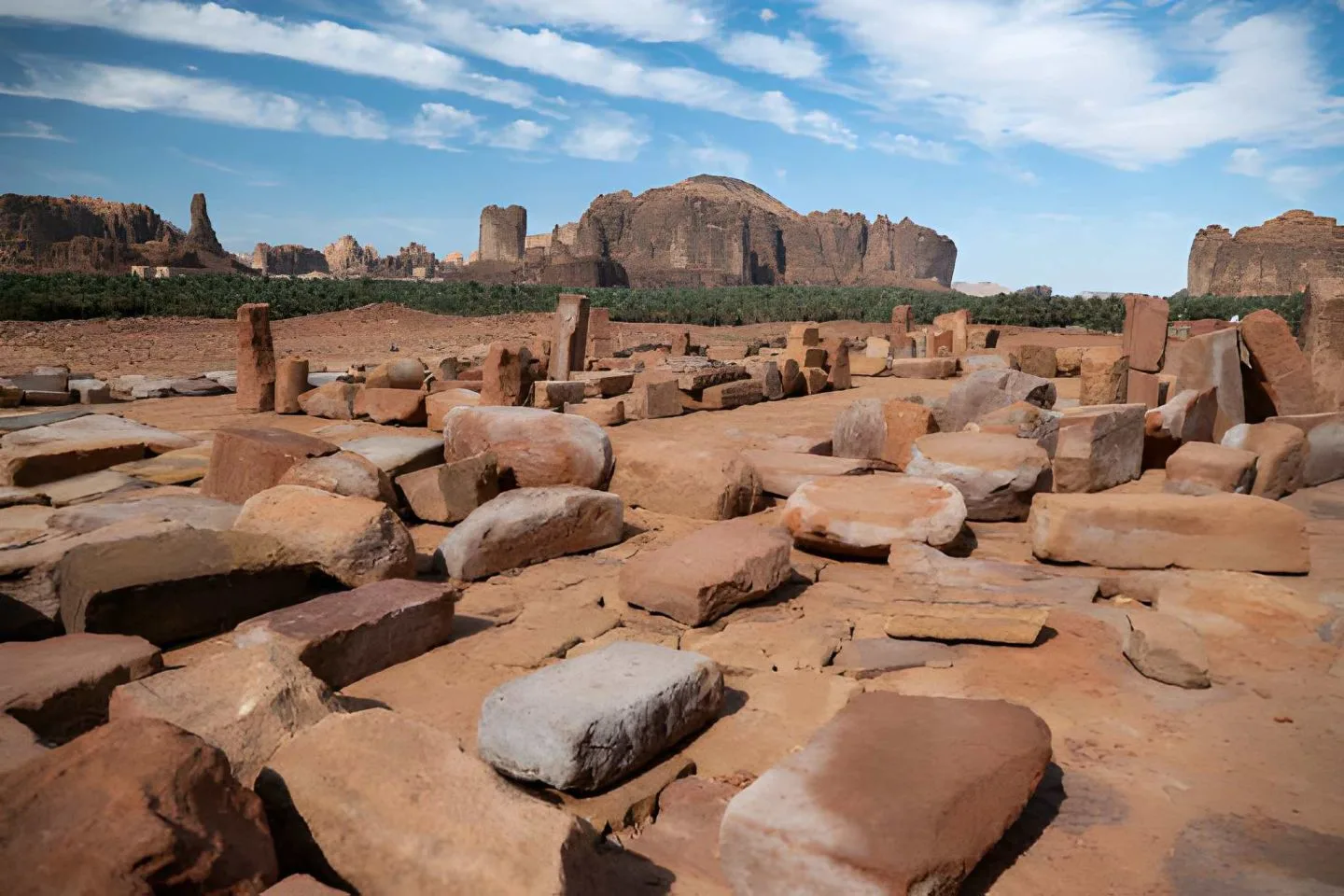
The oasis city of AlUla is without question Saudi Arabia’s archaeological crown jewel. Once the heart of the Dadanite and Lihyanite Kingdoms, this vast open-air museum has yielded extraordinary finds. Recent excavations have uncovered monumental statues, inscriptions, and religious sanctuaries that date back over 2,000 years. Archaeologists have also unearthed burial sites revealing intricate funerary practices and imported artifacts, indicating AlUla’s role as a crossroads of trade linking Arabia, Mesopotamia, and the Mediterranean. Visitors can explore these heritage sites through specialized Alula Day Tours, which narrate the city’s fascinating evolution from ancient capital to modern archaeological wonder.
Rock Inscriptions at Jabal Ikmah
One of the most thrilling archaeological discoveries in Saudi Arabia lies at Jabal Ikmah. Often called the “open library of AlUla,” the site features thousands of inscriptions etched into stone, written in Dadanitic and Thamudic scripts. These ancient texts provide scholars with invaluable data on language, trade laws, and the spiritual beliefs of the region’s inhabitants. Combined with new digital mapping technologies, researchers have been able to reconstruct social and political dynamics in remarkable detail, making Jabal Ikmah a living archive of Arabia’s ancient past.
Hegra: Saudi Arabia’s First UNESCO World Heritage Site
No exploration of Saudi archaeology is complete without visiting Hegra, the southern sister of Petra. Recent studies have revealed even more about the Nabataean civilization that carved Hegra’s breathtaking tombs. Archaeologists unearthed new inscriptions detailing political hierarchies and religious practices, while advanced 3D scanning has exposed hidden chambers and elaborate water systems beneath the sand. These findings reinforce the site’s global importance and highlight Saudi Arabia’s efforts to preserve its archaeological treasures through conservation and tourism.
Neolithic and Bronze Age Discoveries Across the Kingdom
Beyond AlUla, archaeologists are making remarkable progress in uncovering prehistoric settlements across the Arabian Peninsula. Excavations in the northwest, near Tabuk and Wadi Disah, have brought to light ancient stone tools, burial mounds, and rock art depicting human and animal figures. These artifacts date back over 10,000 years and suggest that early communities in Arabia were not isolated but participated in wider cultural and trade exchanges. In fact, the discovery of obsidian tools imported from distant lands hints at Arabia’s significance as a route for early human migration out of Africa.
The Al-Faw Archaeological Site: A Lost Desert City
Deep in the Rub’ al Khali desert lies Al-Faw, an ancient city once bustling with merchants and artisans. Recent digs have revealed residential complexes, temples, and irrigation channels that point to an advanced urban civilization dating back to the 4th century BCE. The discovery of graffiti-like inscriptions and pottery fragments helps historians connect linguistic and artistic styles between central Arabia and neighboring empires. Today, Al-Faw stands as a testament to early Saudi ingenuity and resilience amid harsh desert environments.
Rock Art in Ha’il and the Evolution of Arabian Symbolism
Among Saudi Arabia’s most visually striking archaeological finds are the petroglyphs of the Ha’il region. These ancient rock carvings, depicting hunters, camels, and social scenes, span thousands of years and offer an unmatched glimpse into early Arabian life. The artistry and symbolism of these carvings led UNESCO to grant them World Heritage status, cementing Saudi Arabia’s place on the global cultural map. For visitors seeking an immersive experience, combining heritage exploration with desert adventure, a Riyadh Day Tour often includes stops at nearby rock art sites and heritage villages.
Digital Archaeology and Preservation Initiatives
Saudi Arabia’s archaeological revolution isn’t confined to the physical realm. The Kingdom is integrating cutting-edge technology into excavation and conservation efforts. Drones, ground-penetrating radar, and 3D modeling allow researchers to uncover buried structures without disturbing their integrity. These innovations are particularly crucial in preserving delicate inscriptions and murals. International collaborations with universities and museums ensure that Saudi Arabia’s discoveries are documented and shared with global audiences through digital exhibitions and virtual reality experiences.
Diriyah: The Birthplace of the Saudi State
While prehistoric and Nabataean sites dominate headlines, recent excavations at Diriyah, the ancestral seat of the Saudi royal family, have also turned heads. Archaeologists have unearthed ancient fortifications, pottery shards, and architectural fragments that detail the city’s rise as a political and cultural hub in the 15th century. Efforts to restore Diriyah’s mud-brick structures aim to transform it into a world-class cultural destination—an embodiment of Saudi heritage and unity.
Future Prospects: Saudi Arabia’s Archaeological Vision
Looking ahead, the Kingdom’s archaeological vision is clear: to position Saudi Arabia as a global center for historical research and cultural tourism. With ongoing excavations across Asir, Najran, and the Eastern Province, more discoveries are anticipated that could rewrite early Arabian history. The government’s investment in heritage infrastructure, coupled with its tourism expansion through Saudi Arabia Travel Packages, ensures that both scholars and visitors can continue exploring these incredible sites in comfort and safety.
Frequently Asked Questions About Saudi Arabia’s Latest Archaeological Discoveries
What is the most significant recent archaeological discovery in Saudi Arabia?
The most significant find is the continued excavation of AlUla’s Dadanite and Lihyanite cities, revealing massive statues and inscriptions that shed light on pre-Islamic trade and religion. These discoveries have placed Saudi Arabia at the forefront of Middle Eastern archaeology.
How old are the archaeological sites in AlUla?
Many of AlUla’s sites, including Hegra and Dadan, date back over 2,000 years. However, some rock carvings and artifacts discovered in the surrounding valleys are believed to be from the Neolithic period, over 8,000 years old.
Can tourists visit Saudi Arabia’s newly discovered archaeological sites?
Yes, Saudi Arabia is actively promoting cultural tourism, allowing visitors to explore major archaeological destinations through guided excursions like AlUla Tours Packages and heritage-focused journeys across the Kingdom.
What technologies are being used in Saudi archaeological research?
Researchers employ drones, satellite imagery, LiDAR scanning, and 3D modeling to map and preserve ancient sites. These technologies help uncover buried structures while minimizing physical disturbance to fragile artifacts.
Why are Saudi Arabia’s archaeological discoveries so important?
These discoveries provide vital evidence of Arabia’s role as a cultural and economic crossroads for millennia. They challenge old narratives about isolation and reveal a rich tapestry of civilizations that contributed to global history long before modern times.