Palaces Of Saudi Arabia
Majestic Palaces of Saudi Arabia: The Kingdom’s Architectural Crown Jewels
The palaces of Saudi Arabia are more than just royal residences; they’re living testaments to the Kingdom’s evolution from desert strongholds to modern marvels. Built with the precision of master artisans and infused with centuries of Arabian heritage, these architectural icons mirror both the power and refinement of Saudi royalty. From the mud-brick citadels of Riyadh’s early rulers to the modern palatial estates of today, each palace tells a story of lineage, diplomacy, and splendor. Travelers seeking cultural immersion will find that exploring the palaces of Saudi Arabia reveals not just architectural beauty but also the deep-rooted traditions that shaped the Kingdom’s identity.
Many of these royal landmarks stand amid regions rich in cultural and historical attractions, making them centerpieces of Saudi Arabia Tours. Whether it’s the legendary Murabba Palace, the historic Al Farid Palace in AlUla, or the grand royal complexes of Jeddah, visitors are treated to an extraordinary journey through time. These palaces symbolize the fusion of Islamic artistry, Arabian craftsmanship, and visionary modern design, making them must-see highlights for anyone exploring the Kingdom’s majestic past and vibrant present.
Murabba Palace: The Royal Heart of Riyadh’s Heritage
The Murabba Palace in Riyadh stands as one of the most iconic palaces of Saudi Arabia, reflecting the early 20th-century transformation of the Kingdom under King Abdulaziz. Constructed in 1938 using locally sourced materials, Murabba Palace blends traditional Najdi architecture with innovative touches that signaled a shift toward modernization. The palace complex, with its sprawling courtyards and intricately carved wooden doors, offers visitors a glimpse into the royal lifestyle of the time. Its symmetry, decorative motifs, and cooling ventilation systems highlight the ingenuity of Saudi design before the advent of modern construction methods.
Located near the National Museum of Saudi Arabia and the restored Masmak Fort, Murabba Palace forms part of Riyadh’s historical triangle. For those joining Riyadh Day Tours, this palace is an essential stop—capturing the moment when Saudi Arabia began embracing modernization while preserving its ancestral soul.
Al Farid Palace: The Nabatean Wonder of AlUla
Carved directly out of a sandstone mountain, the Al Farid Palace in AlUla is not a royal residence but rather a monumental tomb that resembles a grand palace façade. Its moniker, “The Lonely Castle,” reflects its solitary presence among the rock formations of Hegra (Madain Saleh), a UNESCO World Heritage Site. This extraordinary monument showcases the sophistication of Nabatean architecture and its influence on later Arabian structures. Its towering columns, precise carvings, and enduring façade stand as a symbol of the ancient civilization that once thrived in northwestern Arabia.
Travelers can discover this breathtaking structure through specialized Alula Day Tours or as part of curated AlUla Tours Packages that bring history to life amidst the desert’s silence. Al Farid Palace, with its golden hue and artistic detailing, embodies the deep historical roots of the Kingdom’s architectural legacy.
Nassif House: Jeddah’s Royal Residence of the Hijaz Era
In the heart of Jeddah’s old quarter, Al-Balad, stands the elegant Nasif House—a masterpiece of Hijazi architecture and one of the most famous palaces of Saudi Arabia along the Red Sea coast. Built in the late 19th century, this mansion once hosted King Abdulaziz during his unification campaigns. Its coral-stone façade, wooden lattice windows (rawasheen), and decorative ceilings tell stories of a bygone era when Jeddah was the Kingdom’s gateway to the world.
Visitors exploring Jeddah Day Tours & Excursions often marvel at how Nasif House merges Arabian elegance with maritime influences. The palace now operates as a museum, revealing the cultural exchanges and architectural brilliance that defined Jeddah’s rise as a cosmopolitan hub.
Kaaki Palace: The Hidden Gem of Taif’s Royal Splendor
Perched in the cool highlands of Taif, the Kaaki Palace is a lesser-known yet enchanting royal residence that echoes the charm of early 20th-century Hijazi design. Featuring tall arched windows, marble floors, and ornate balconies, the palace was built by a wealthy merchant family and later served as a summer retreat for royal guests. Surrounded by Taif’s fragrant Rose Gardens, Kaaki Palace captures the serenity and refinement of an era when Taif was the Kingdom’s summer capital.
Its preservation today allows travelers to admire the intricate details that define Saudi palatial architecture, combining Ottoman finesse with traditional Arabian flair. The palace’s historical significance and visual grandeur make it a must-see stop for heritage enthusiasts.
Diriyah: The Birthplace of the Saudi Dynasty
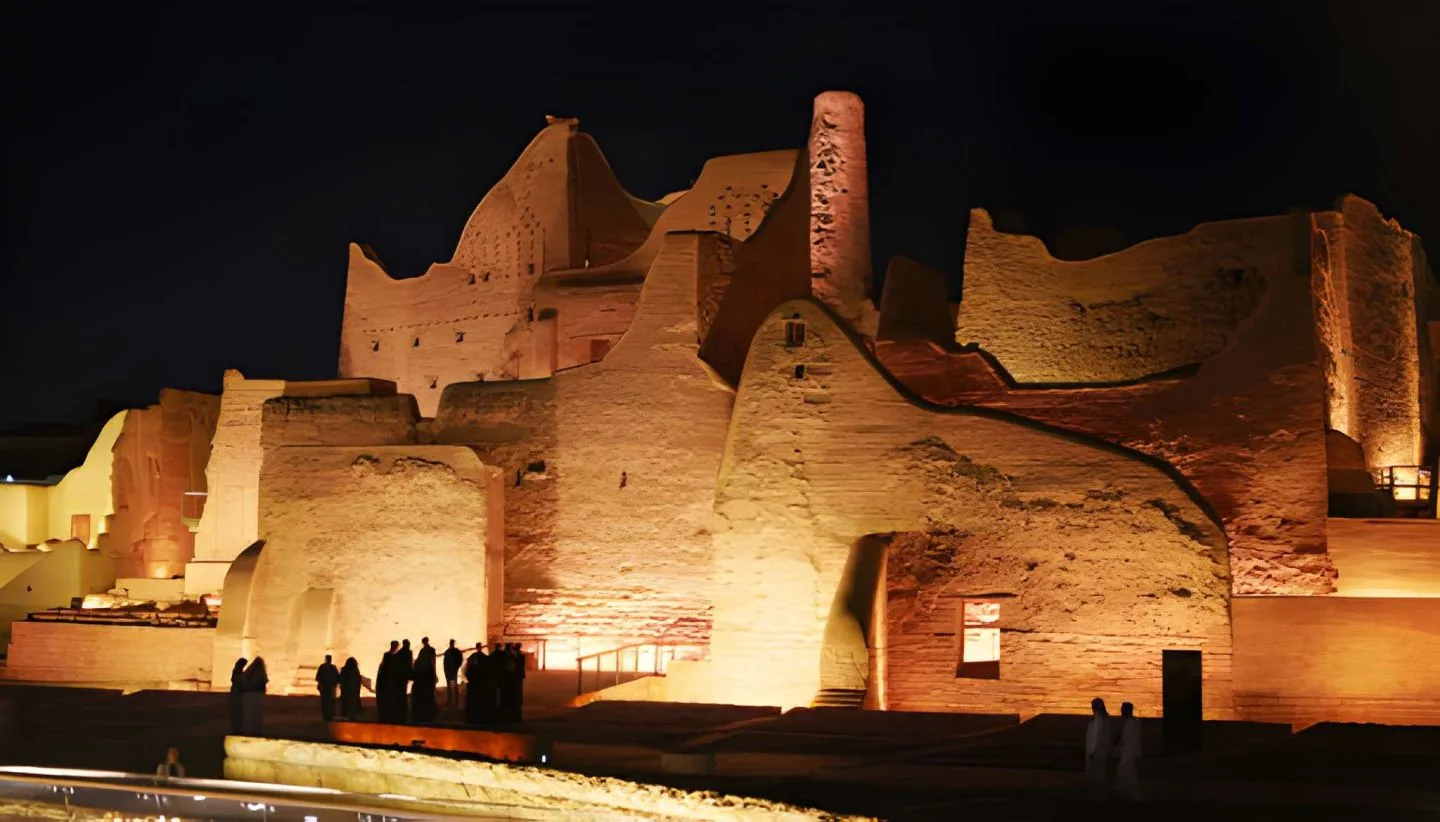
The ancient city of Diriyah, the original home of the Al Saud family, stands as the cradle of Saudi heritage. Although not a single palace, Diriyah hosts several royal structures that predate Riyadh’s modern expansion. Its mud-brick fortresses and palatial compounds once housed the rulers who founded the first Saudi state in the 18th century. The district’s At-Turaif area, a UNESCO-listed site, showcases architectural techniques that influenced many of the palaces built in later centuries.
Today, Diriyah is being transformed into a cultural tourism destination, blending restoration with luxury experiences. Visitors who embark on a Riyadh Tour Package can witness how the Kingdom honors its roots while envisioning a modern future.
Contemporary Royal Palaces of Saudi Arabia
While historical palaces reflect the Kingdom’s formative years, modern royal residences represent its global stature. Palaces like Al-Yamamah and Al-Salam in Riyadh exemplify grandeur through modern architecture fused with traditional motifs. With their vast courtyards, marbled halls, and gilded interiors, they host diplomatic ceremonies and state events, symbolizing Saudi Arabia’s role on the world stage.
These palaces, though not open to the public, anchor the Kingdom’s political and cultural identity. Their design—featuring Islamic calligraphy, domed pavilions, and elaborate gardens—demonstrates how Saudi palatial architecture continues to evolve while remaining deeply rooted in heritage. For travelers inspired by royal aesthetics, nearby attractions like Kingdom Tower and Boulevard City highlight the seamless fusion of modern luxury and timeless design.
Preservation and Tourism: Experiencing Saudi Palaces Today
Saudi Arabia’s commitment to heritage preservation ensures that its palaces remain accessible, educational, and awe-inspiring. The government’s restoration initiatives have turned many of these landmarks into museums, cultural centers, and tourism hubs, aligning with Vision 2030’s emphasis on cultural tourism. For travelers exploring through Saudi Arabia Travel Packages, visiting these royal gems offers a front-row view of the Kingdom’s art, history, and craftsmanship.
From the mud palaces of Diriyah to the stone façades of Jeddah, each site invites exploration and reflection. Whether through curated Saudi Arabia Day Tours or in-depth cultural itineraries, the palaces of Saudi Arabia promise an unforgettable journey through elegance, power, and tradition.
FAQs About Palaces of Saudi Arabia
What is the oldest palace in Saudi Arabia?
The oldest known royal structure is located within Diriyah, the ancestral home of the Al Saud family. Its mud-brick palatial residences date back to the 18th century and embody early Najdi architectural traditions that influenced later royal architecture across the Kingdom.
Can tourists visit Murabba Palace in Riyadh?
Yes. Murabba Palace is open to visitors as part of the King Abdulaziz Historical Center. Tourists can explore its halls, artifacts, and exhibits that narrate the story of King Abdulaziz and the Kingdom’s formation, often included in Riyadh Day Tours.
Where is Al Farid Palace located?
Al Farid Palace stands in the archaeological site of Hegra (Madain Saleh) in AlUla. This monumental tomb is one of the most photographed landmarks in the region and can be visited as part of AlUla Holiday Packages.
Are the modern palaces of Saudi Arabia open to the public?
Modern royal palaces such as Al-Yamamah and Al-Salam serve as administrative and ceremonial residences for the monarchy. They are not open to the public, but visitors can view their exteriors and surrounding landmarks during official city tours.
Which Saudi city has the highest number of historical palaces?
Riyadh holds the largest concentration of historical palaces, including Murabba Palace, Al-Masmak Citadel, and several restored royal residences. Each one offers a unique window into the country’s transformation from tribal unity to modern statehood.